Budapest Travel Guide for History and Tradition: A Culture-First Way to Read the City
Budapest reads best in layers: Buda’s quiet hills, Pest’s civic momentum, thermal baths used as maintenance, and markets that function as everyday infrastructure. A culture-first guide built on rhythm, not rushing.

Budapest sets its tempo quickly.
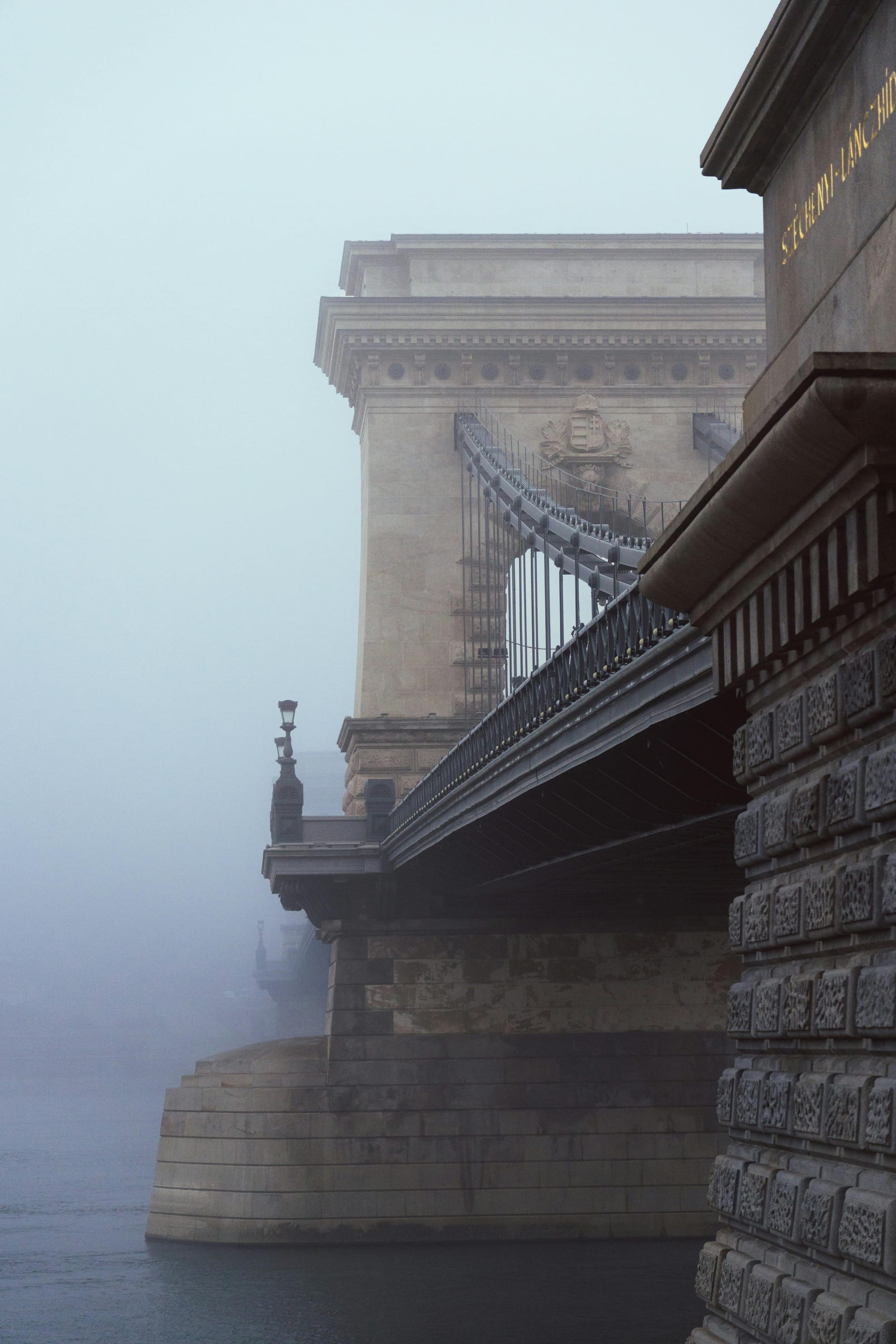
The Danube divides the city like a slow, dark ribbon. Trams rattle along the riverbank, bells carry from Castle Hill, and, on cold mornings, steam rises from thermal water as if the city is exhaling. Late afternoon brings a softer sound—teaspoons against porcelain in historic cafés, coats brushed at the door, conversation held a little lower than expected.
This Budapest travel guide takes a culture-first approach, favoring context over checklists and timing over rushing. Budapest makes the most sense when its layers are allowed to stack in the mind: medieval streets, Ottoman thermal baths, Habsburg boulevards, twentieth-century scars, and a present that keeps moving without erasing what came before.
Arrive Like a Local: Learn Budapest’s Rhythm Before You Start Sightseeing
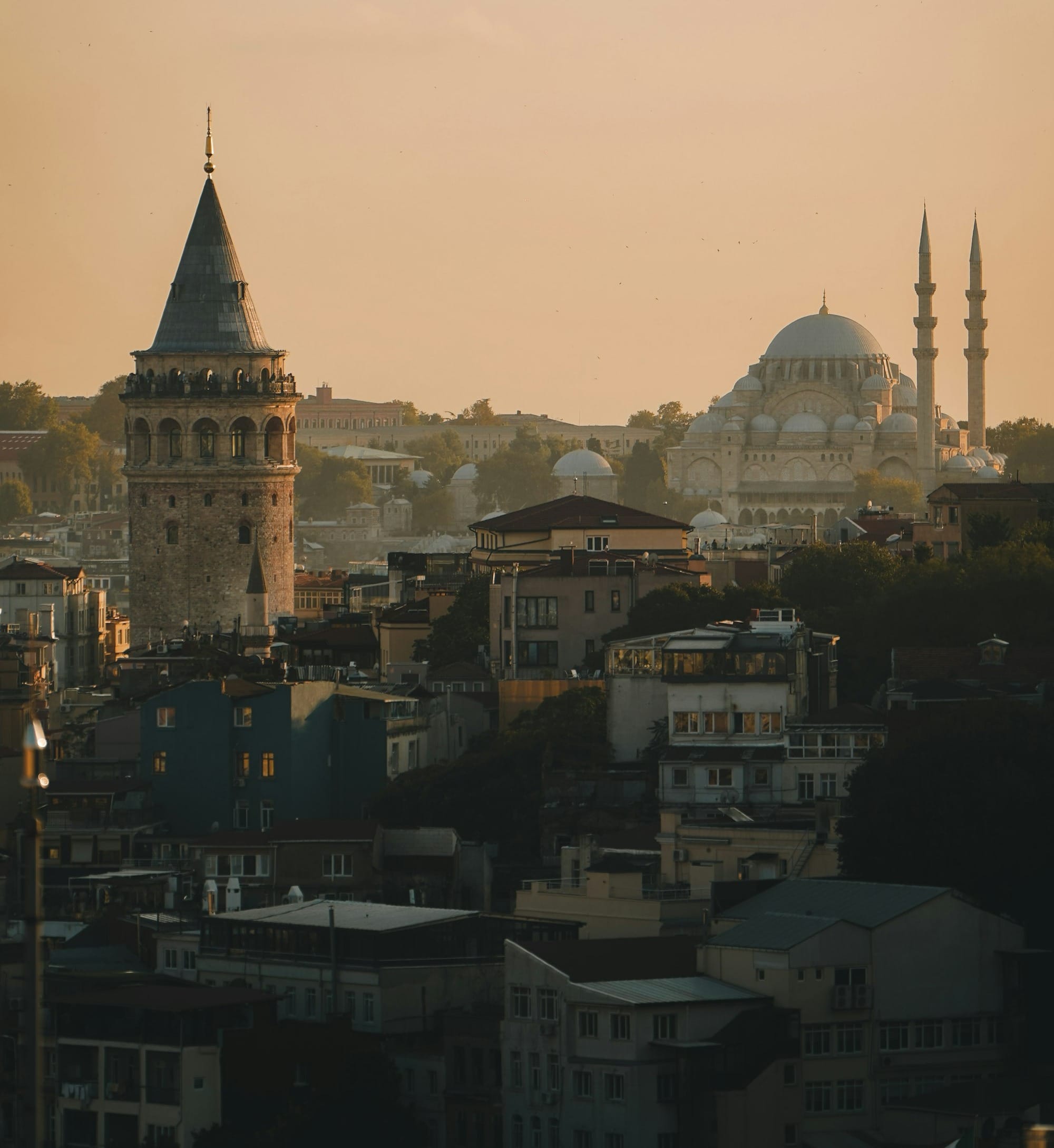
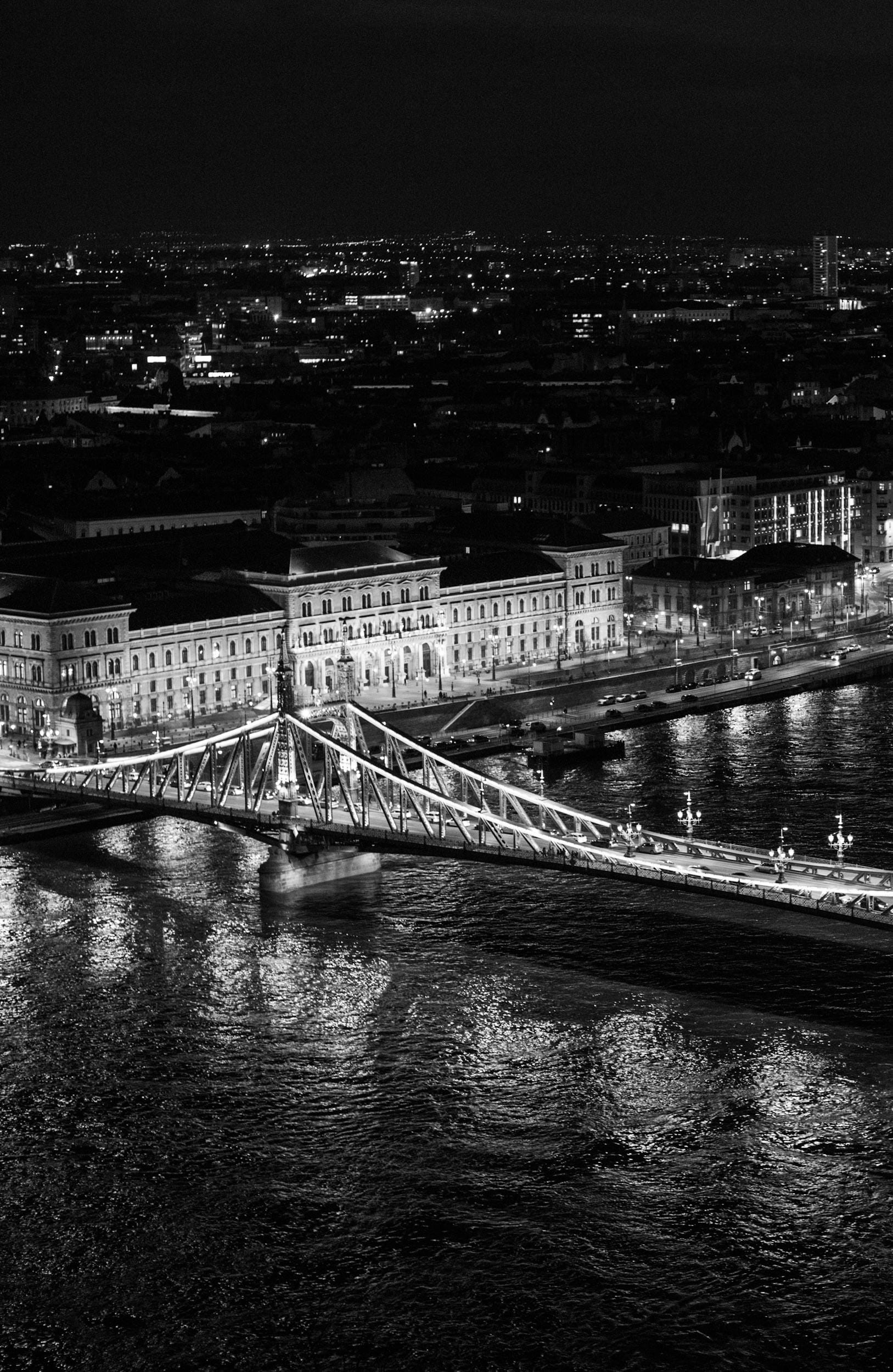
Budapest rewards orientation because the city’s shape teaches its history. Buda rises in older, quieter contours, with hills, courtyards, and defensive views. Pest is flatter and more direct, a grid where daily life flows fast, anchored by cafés, grand avenues, and apartment blocks that still feel lived-in. The Danube is the simplest compass. If the river is visible, the rest falls into place. Bridges become landmarks rather than obstacles, and tram lines start to feel like moving balconies. On a first day, it’s often better to trade ambition for observation: a walk by the river, a warm drink, and one long pause looking across the water at the Parliament’s silhouette.
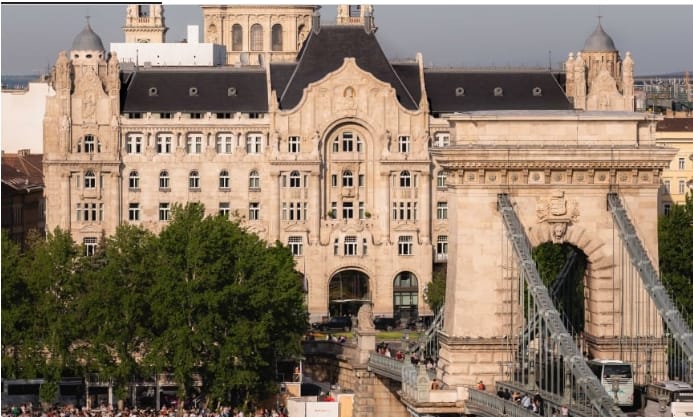
Where you wake up quietly determines how easily this rhythm lands. Along the river, buildings still understand arrival. At Four Seasons Hotel Gresham Palace Budapest, the city explains itself before breakfast—Chain Bridge anchoring the view, Pest stirring across the water. The Art Nouveau structure doesn’t announce luxury; it simply remembers how Budapest once received guests and still does, when allowed.
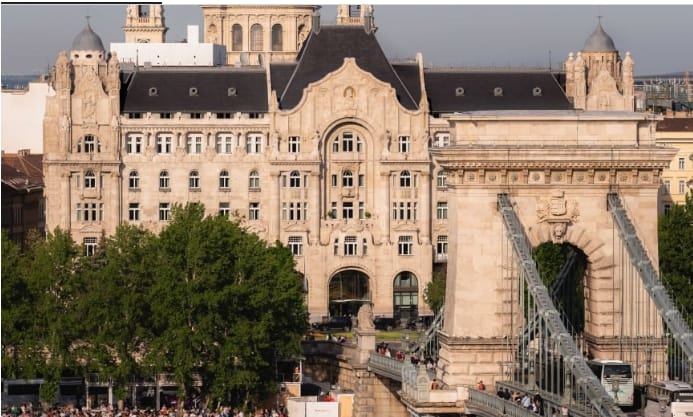
Further north, closer to residential blocks, Kimpton BEM Budapest introduces the city differently. Mornings here feel local first. Bakeries open for neighbors, not visitors, and the Danube becomes something you drift toward rather than aim for. It suits travelers who want repetition, not spectacle, to do the teaching. Spring and fall usually offer the cleanest balance of light and comfort. Winter has its own gift: quieter museums, calmer streets between indoor stops, and bath culture that feels essential rather than scenic. Early mornings and weekdays tend to feel more private, especially in the historic zones that fill up by midday.
A First Walk That Teaches You Budapest Without Rushing
A simple loop works because it shows Budapest’s two personalities in one gentle arc. Start on the Pest side along the Danube promenade in the late morning, when the city is awake but not loud. Watch how the light hits the Parliament side, and how the river flattens sound. Cross a bridge, pause on the Buda side, and look back. The perspective shift is the lesson. Buda’s hills read as protection and distance, while Pest reads as openness and civic display. Then return by tram along the river. The ride is short, but it stitches together monuments, residential blocks, and everyday errands in a single glance.
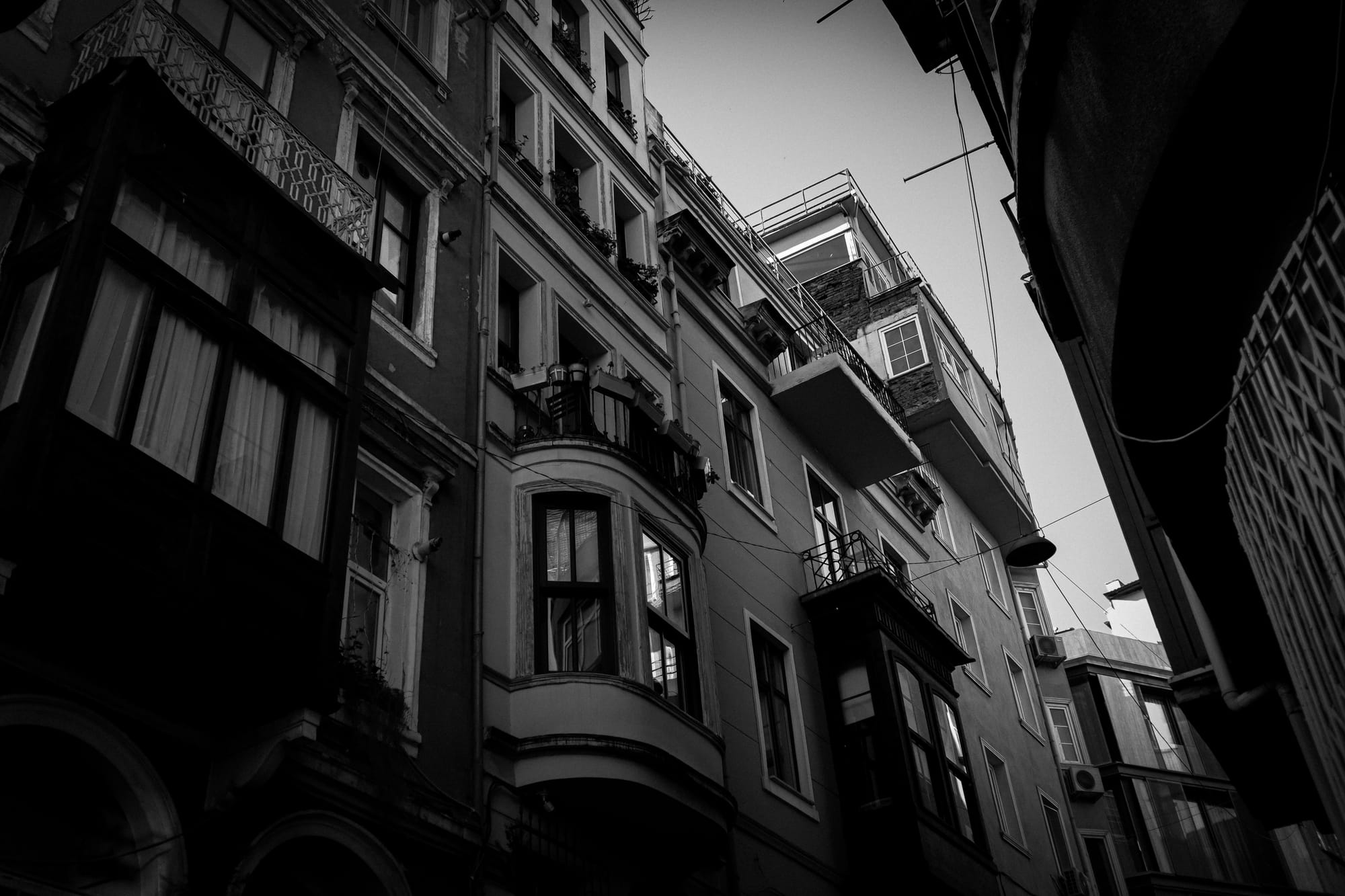
Plan a long pause after lunch. Budapest has a café rhythm that doesn’t reward speed, and the day often feels better with one deliberate lull built in. Historic cafés still perform their original function here—not as nostalgia, but as infrastructure. At Café Gerbeaud, time stretches politely. Porcelain cups, mirrored walls, a hum that never tips into noise. Nearby, New York Café carries more theater, but its bones are real. Writers once treated it as office and refuge, and if you stay long enough, the room still feels productive rather than performative.
Reading the City in Two Halves: Understanding Buda and Pest
Budapest makes the most sense when you stop thinking of it as one city and start reading it as a conversation. The Danube doesn’t divide Budapest so much as it explains it. On one bank, Buda rises—older, quieter, defensive by instinct. On the other, Pest stretches outward—flat, civic, built for movement and display. Neither side works on its own. Together, they create the tension that gives the city its character.
Buda holds memory. Hills slow you down. Streets curve instead of align. Buildings turn inward, shaped by centuries when protection mattered more than openness. Life here still feels measured. Even today, mornings arrive softly: bakeries open for neighbors, footsteps echo, and views across the river invite pause rather than progress. Buda is where Budapest remembers itself—not as a museum, but as habit. Castle Hill, residential lanes, and the older bath culture reinforce this instinct. You come here to look back, both literally and historically, and to understand why restraint still matters in the city’s emotional grammar.

Pest, by contrast, carries momentum. Its grid invites circulation. Boulevards like Andrássy Avenue were built to be seen and used, projecting confidence outward. Cafés open onto sidewalks, conversations spill into the street, and daily life unfolds in public. Pest is where Budapest performs its civic role—hosting culture, commerce, music, and modern life without abandoning its past. Theaters, opera houses, grand cafés, and markets all belong naturally to this side of the river. It’s not louder because it’s careless; it’s louder because it was designed for gathering.
The Danube mediates between them. Bridges become more than crossings—they’re moments of recalibration. Walk from Pest to Buda and the city exhales; walk back and it re-engages. Trams that run along the river act like moving balconies, letting you watch the two sides adjust to each other in real time. This constant exchange is why Budapest never feels static. History here doesn’t sit still; it moves back and forth across the water every day.
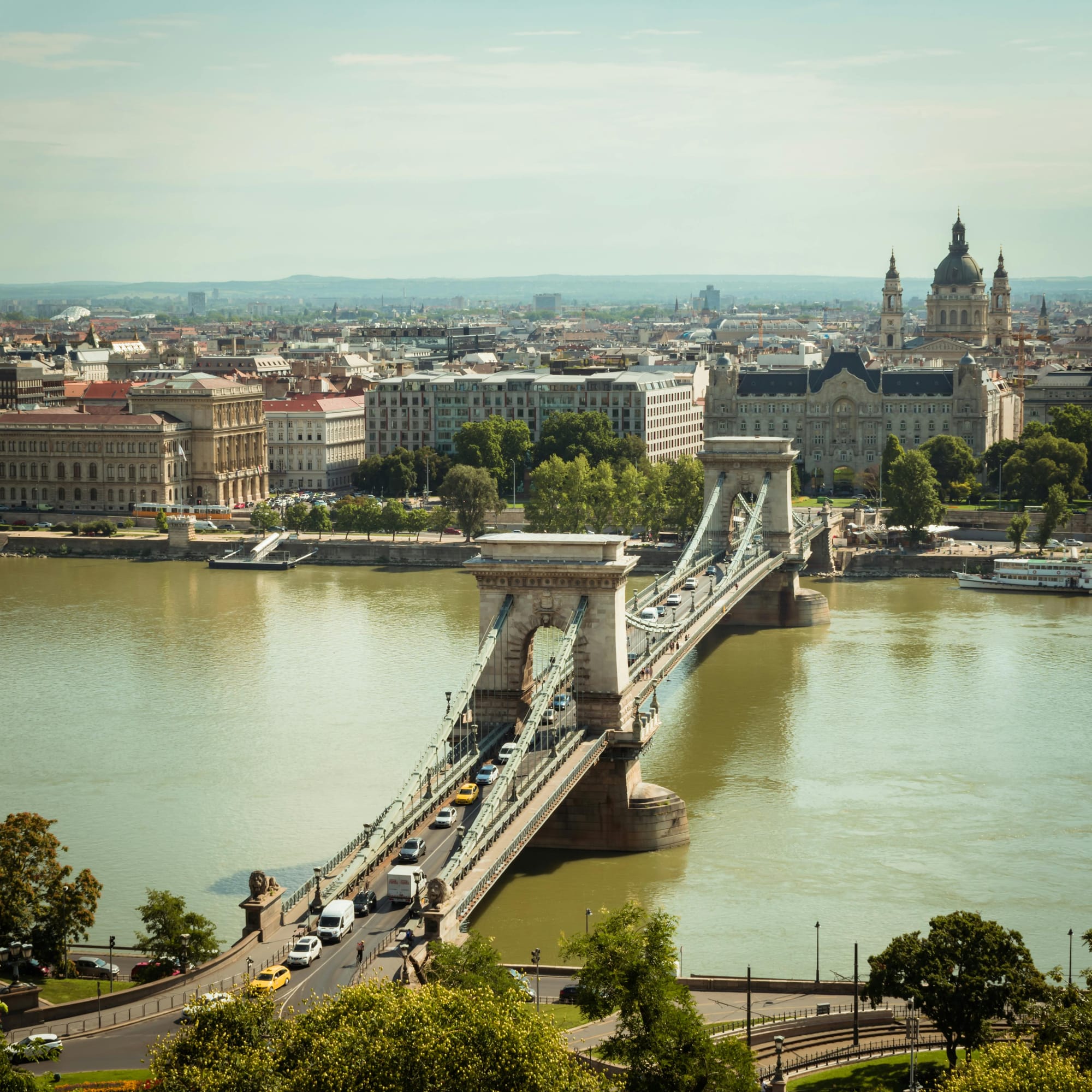
Understanding Budapest means learning when to be on each side. Mornings belong naturally to Buda, when quiet sharpens attention and the city’s older logic feels intact. Afternoons and evenings suit Pest, when light warms façades and cultural life gathers energy. Plan against that rhythm and the city resists you. Follow it, and everything aligns with surprising ease. Budapest isn’t split—it’s balanced. Buda anchors. Pest advances. The river keeps them honest. Once you grasp that relationship, the city stops feeling complex and starts feeling legible, a place whose history and culture are written not in monuments alone, but in how people move, gather, and return across the water.
Small Cultural Notes That Save Awkward Moments (and Earn Quiet Respect)
Budapest is welcoming, but it values quiet competence. The city reads intention quickly, and small signals matter more than enthusiasm. A simple jó napot when entering a shop or restaurant goes further than perfect pronunciation. It tells people you’re paying attention.
In churches and sacred spaces, behavior adjusts almost automatically. Voices soften. Phones disappear. Shoulders covered and movements unhurried signal respect without needing explanation. This isn’t about strict rules—it’s about understanding that these places still function as living sites, not historical backdrops..

Synagogues, in particular, ask for an extra beat of awareness. Photography isn’t assumed; it’s requested. Memorial spaces are treated as exactly that—sites of remembrance, not scenery. If you’re unsure, pause and observe. Budapest rewards people who read the room before acting.

Budapest Synagogues & Jewish Heritage (Official Tourism Overview) Guidance on visiting synagogues respectfully, including photography norms and historical context.
That same instinct carries into cultural performances. The city still holds onto an older evening register. Dressing neatly for the opera or a concert isn’t about formality for its own sake; it’s part of the shared ritual. Around Andrássy Avenue, you’ll notice people arriving with intention—coats chosen carefully, conversations lowered, the evening framed as something worth preparing for. At the Hungarian State Opera House, that atmosphere feels especially intact. The performance begins well before the curtain rises.




Tipping follows a similarly understated logic. In restaurants, ten to fifteen percent is customary unless service is already included. In taxis, rounding up feels natural. Nothing theatrical—just acknowledgment. Taken together, these habits explain a lot about Budapest. The city isn’t rigid, but it notices. Move thoughtfully, observe first, and you’ll find yourself fitting in without trying to.
A concise overview of greetings, tipping, and social norms that help travelers move comfortably through daily life.
🔗 https://www.hungarytoday.hu/hungarian-customs-etiquette/
These small calibrations—how you enter a space, how you dress for the evening, how you acknowledge service—don’t just prevent awkward moments. They unlock a version of Budapest that feels generous, legible, and quietly appreciative of travelers who notice the details.
Where Budapest Starts to Make Sense: Neighborhoods That Hold the City’s History
Budapest isn’t organized by borders so much as by temperament. Neighborhoods don’t announce themselves with clear lines on a map; they reveal their character through sound, light, and pacing. The city changes block by block, but its larger story remains legible once you learn how to read it. Buda holds the older layers—hills, courtyards, inward-facing streets that still value quiet. Pest carries the outward-facing life of the city: cafés, music, civic institutions, and the steady momentum of daily movement.
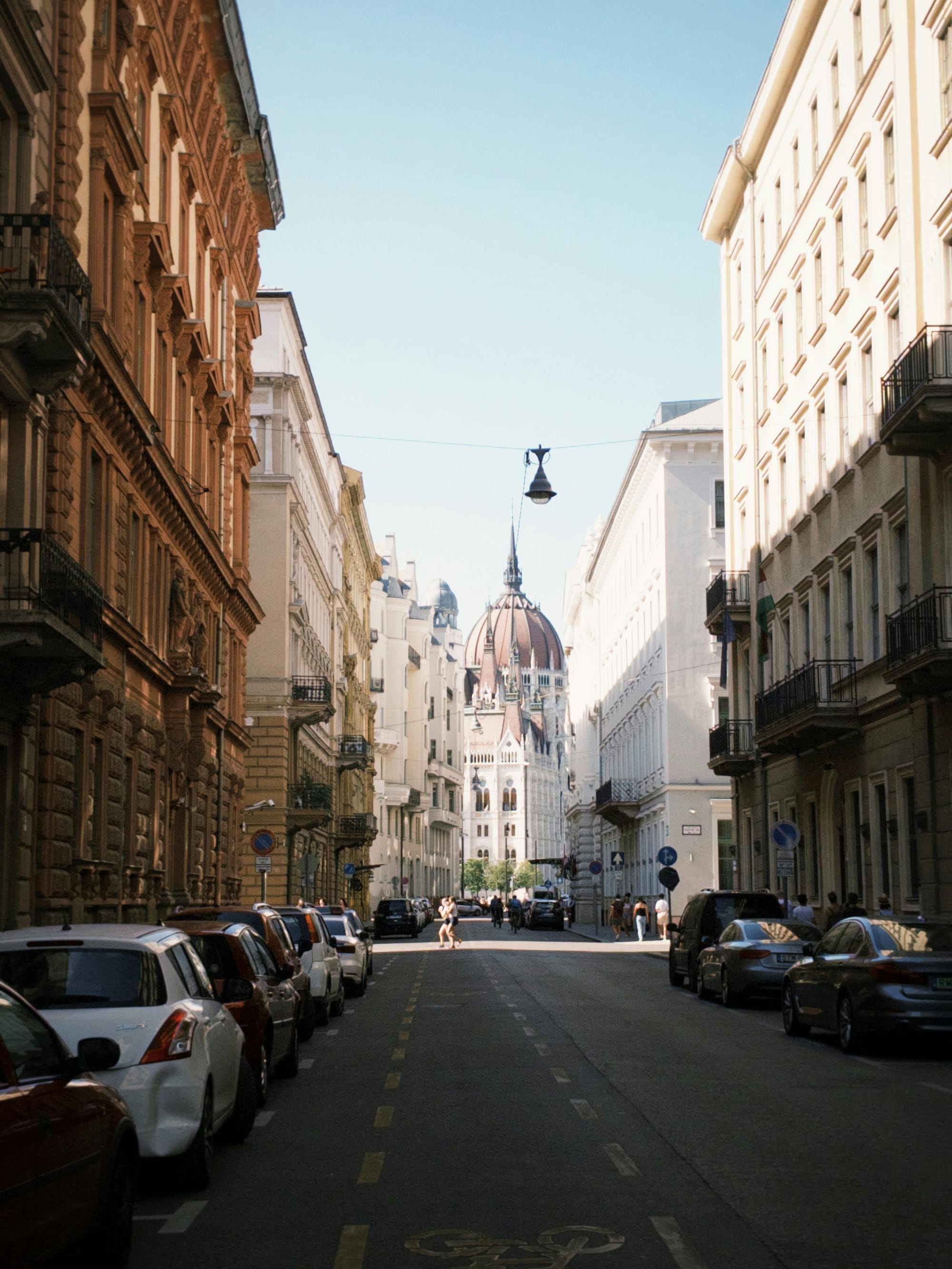
Timing reshapes everything. Castle Hill belongs to the early hours, when footsteps echo lightly and the city’s defensive logic feels intact. By midday, the same streets tighten with visitors and movement, and the lesson has already been given. Pest’s grand avenues come into their own later, when façades catch warm afternoon light and the city begins its slow shift toward evening culture. And nowhere is contrast sharper than in the Jewish Quarter, where mornings feel archival and reflective, while nights push outward into sound and sociability.
Once you start to notice these shifts, Budapest stops feeling fragmented and begins to read as something more sophisticated: a city composed of complex layers, each evolving at its own pace. History here doesn’t stack neatly and move on. It learns from the layer before it, adapts, and continues—allowing medieval, Ottoman, imperial, and modern lives to coexist without erasing one another. Time in Budapest isn’t linear; it’s conversational, shaped by memory as much as momentum.
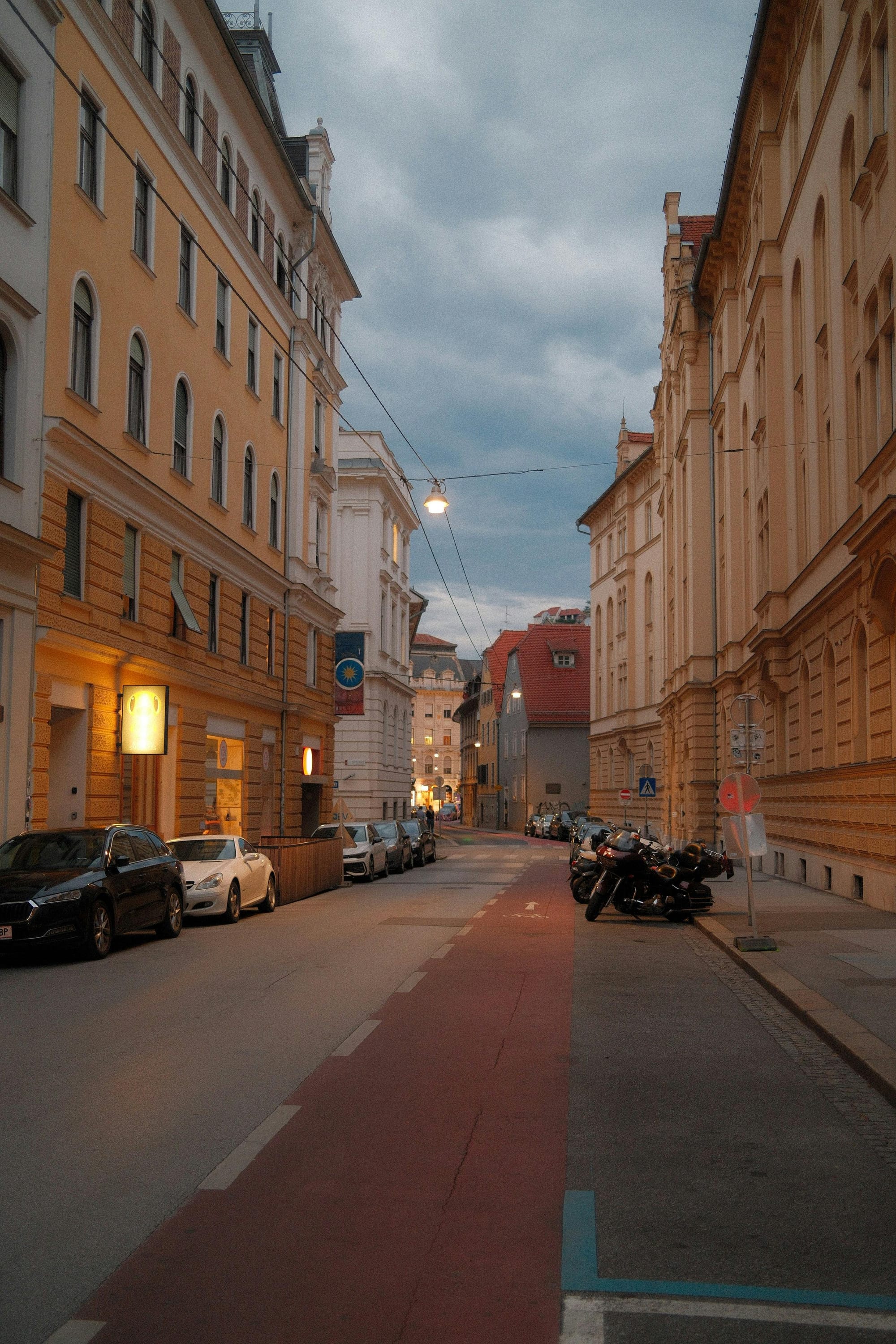
Neighborhoods aren’t competing for attention. They’re taking turns. Each holds its moment, then yields gracefully to the next. The city asks you to move with it—to let mornings stay quiet and inward, afternoons remain observational and unhurried, and evenings become intentional rather than reactive. When you follow that rhythm, Budapest’s history no longer sits behind glass or plaques. It unfolds at street level, lived and legible, one neighborhood at a time.
Castle Hill and District I: Medieval Hungary and Ottoman Traces in One Frame
Castle Hill reads like a stone manuscript written over centuries, each layer pressed tightly against the next. Cobbled lanes narrow without warning. Courtyards turn inward. Buildings sit close together, as if still bracing against siege. This is not accidental charm—it’s defensive memory made architectural. Go early, before the day gathers momentum, when footsteps echo lightly and the hill feels deliberate rather than busy. In those first hours, Castle Hill explains itself without commentary.
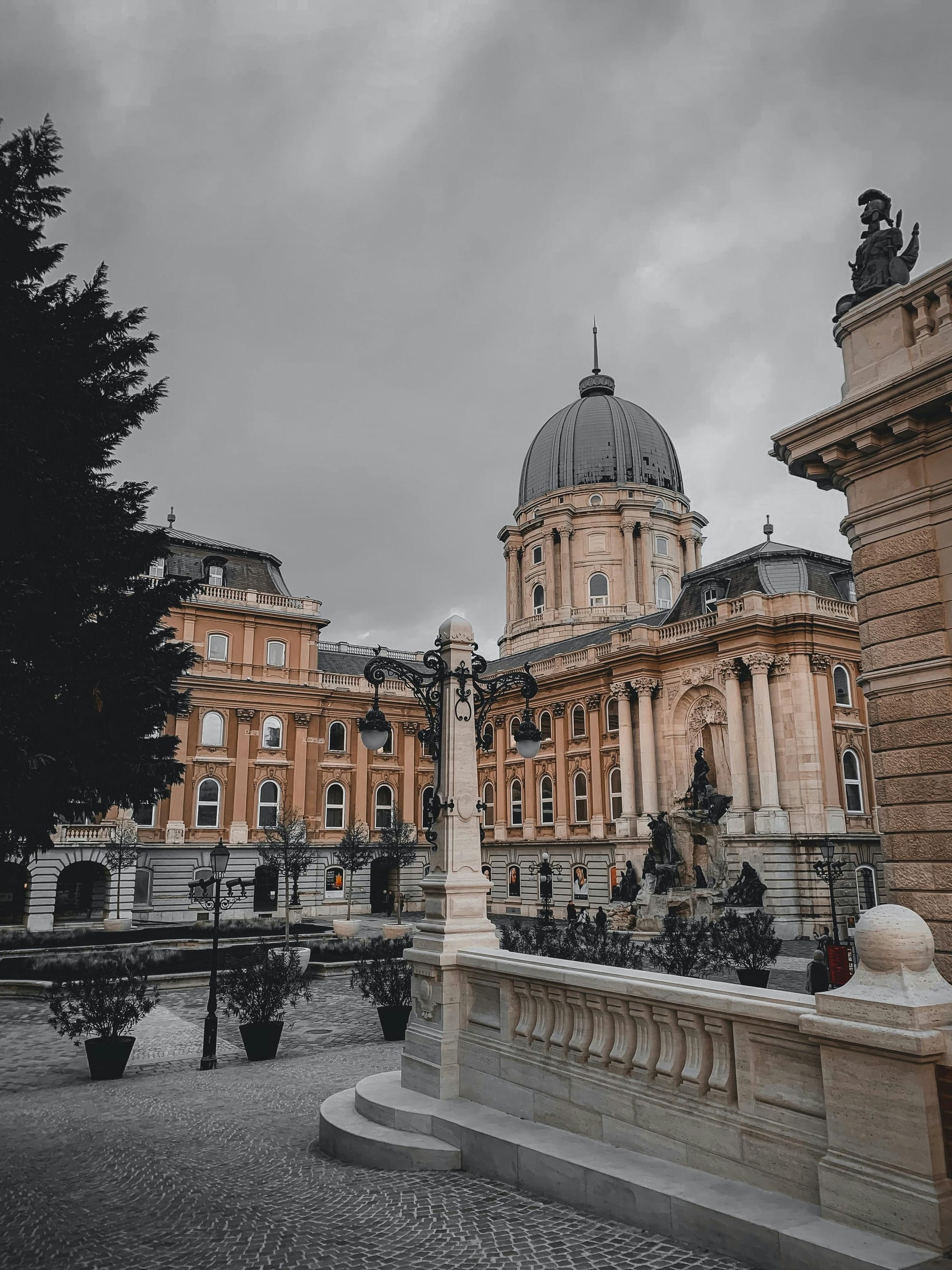
From the ramparts, the city unfolds in long, measured views. Pest spreads outward in grids and grand gestures, while Buda holds its ground—older, quieter, self-contained. The perspective is the lesson. You understand immediately why power once lived up here, watching rather than announcing.
The Ottoman layer isn’t theoretical on Castle Hill. It’s lived, and it’s warm. Rudas Baths makes the sixteenth century tangible through domes, steam, and echo. Inside, light filters through small openings in the ceiling, voices drop instinctively, and time slows into repetition—step, soak, breathe. The bath doesn’t explain itself. It doesn’t need to. Its presence is enough to remind you that Budapest’s history didn’t replace itself; it accumulated.

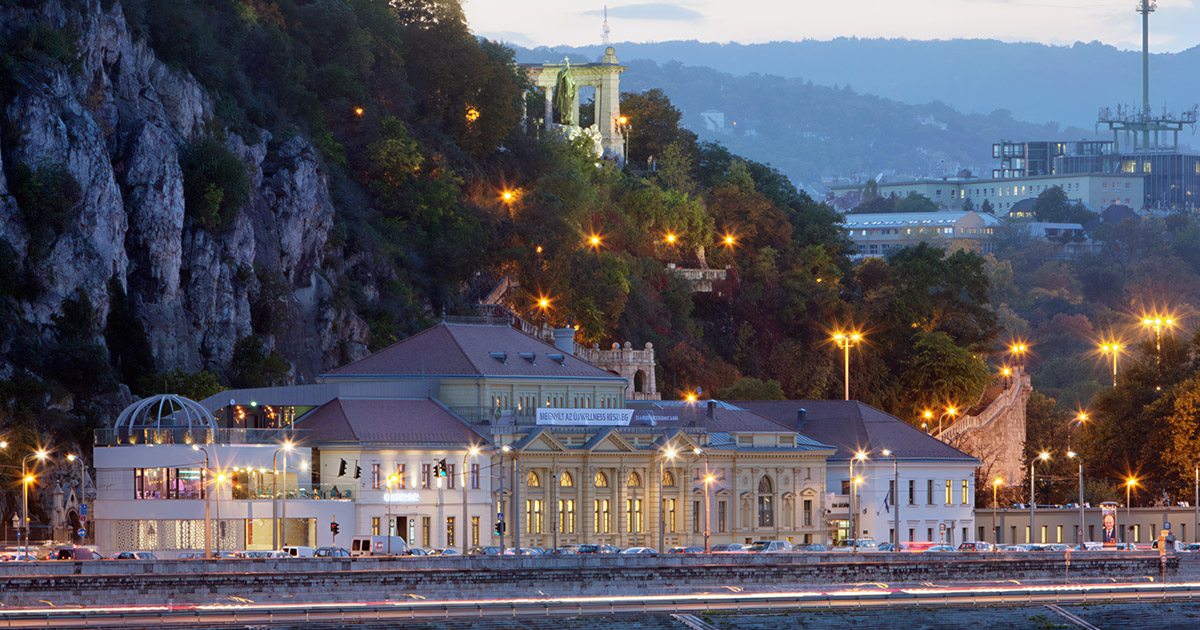
Staying nearby shifts the relationship to the hill entirely. Here, history isn’t something you visit between breakfast and lunch—it’s what you pass on the way back to your room. Several properties in District I integrate heritage elements directly into their design, folding medieval ruins, original walls, or archaeological remnants into the architecture. The effect is subtle but powerful. You’re reminded, repeatedly and without signage, that the past here hasn’t been sealed behind glass.
Hotels that incorporate preserved stonework and historic foundations don’t feel themed; they feel grounded. Breakfast might be served above exposed ruins. Corridors trace the outlines of older structures. The experience reframes Castle Hill not as a scenic overlook, but as a living district where centuries still coexist at eye level. By late morning, tour groups arrive and the hill tightens. That’s the cue to descend—to let the lesson settle rather than push for more. Castle Hill gives generously in small doses. Treated with patience, it becomes one of the clearest places in Budapest to understand how history shapes daily life, not as nostalgia, but as structure.
Andrássy Avenue and District VI: Music, Memory, and Grand City Detail
Andrássy Avenue doesn’t ease you in—it declares itself. The boulevard was designed as a statement of nineteenth-century confidence, and it still carries that posture today. The proportions are deliberate, almost ceremonial: façades set back just enough to breathe, trees aligning the street like punctuation marks, buildings scaled for arrival rather than efficiency. Walking here feels different from the rest of Pest. Your pace adjusts without instruction. Shoulders straighten. Even casual afternoons seem to anticipate an evening encore.
This is where Budapest’s cultural life organizes itself. Music academies, theaters, salons, and the Hungarian State Opera House cluster naturally along the avenue, as if the city still expects people to move from dinner to performance, from performance to quiet conversation under streetlights. Late afternoon is the sweet spot. Light softens the stone, balconies catch a golden edge, and the avenue shifts from daytime formality into something more intimate—still polished, but alive. District VI carries this confidence inward. Side streets echo with rehearsal sounds, café chatter from tables that have hosted the same routines for decades, and a sense that culture here isn’t consumed so much as maintained. This is a neighborhood built around repetition: students practicing, audiences returning, restaurants feeding people before curtain time.
Dinner along Andrássy works best when it respects that restraint. Gundel remains one of the city’s culinary landmarks precisely because it understands its role. The room carries memory—formal without stiffness, attentive without spectacle. Hungarian gastronomy here isn’t reinvented; it’s preserved with care, the kind of cooking that knows when tradition is the point. A few steps forward in time brings a different confidence. Stand speaks in a contemporary register, translating Hungarian ingredients with precision rather than nostalgia. The discipline is quiet but unmistakable, a signal that Budapest’s culinary future doesn’t require abandoning its past. Nearby, Borkonyha Winekitchen balances that same forward motion with approachability—Hungarian foundations, European fluency, and a wine program locals trust enough to return to again and again.


That balance—heritage and evolution, ceremony and everyday use—is what defines Andrássy Avenue and District VI. It’s not a neighborhood that asks to be rushed. It wants you dressed for the evening, attentive to detail, and willing to let the city’s grander voice carry the conversation for a while.
The Jewish Quarter (District VII): Heritage That Rewards Time and Care
District VII is often described in shorthand, but that does the neighborhood a disservice. Its reputation splits between remembrance and revelry, yet the deeper story reveals itself only when you arrive early, before the volume rises and the streets shift their posture. Mornings are the right register here. Shopfronts open slowly, courtyards stay hushed, and the neighborhood’s historical weight feels intact rather than staged.
Meals in the Jewish Quarter work best when they respect that quieter tempo. Rosenstein Vendéglő operates on family logic rather than trend. This is Hungarian-Jewish cooking that hasn’t been translated for explanation or presentation. Dishes arrive as they always have—goose, stews, soups built patiently—fed by memory rather than menu narrative. Locals return not out of nostalgia, but trust. It’s a place to eat when you want to understand how food carries history forward without ceremony.
As the day eases toward evening, the neighborhood loosens without losing its center. Mazel Tov offers a gentler transition. The courtyard fills with light and conversation, but the mood stays measured. It’s social without tipping into performance, a place where the neighborhood breathes rather than announces itself. Early evening suits it best, when the space still belongs to dinner rather than nightlife. Taken together, these moments show District VII at its most legible—layered, human-scaled, and deserving of time. Arrive early, eat with intention, and let the neighborhood tell its story before the city’s louder rhythms take over.
Stays With Intention: Pick a Base That Supports Cultural Days and Real Recovery
Where you stay in Budapest doesn’t just determine comfort—it determines comprehension. This is a city where mornings matter, where transitions between districts carry meaning, and where evenings often ask for restoration rather than stimulation. Budapest’s best hotels are not indulgences layered onto the trip; they are part of the city’s operating logic. They shape how the day opens, how it softens, and how memory settles.
What follows isn’t a ranking. It’s a way of reading Budapest through its hotels—by neighborhood, temperament, and the kind of traveler each supports.
Riverfront Grandeur: When Arrival Is Part of the Education
There are places in Budapest where waking up already teaches you something about the city. Along the Danube, hotels still understand how to receive guests with dignity rather than spectacle.
Four Seasons Hotel Gresham Palace Budapest remains one of the clearest introductions to the city’s architectural confidence. The Art Nouveau façade doesn’t perform luxury; it remembers it. From rooms overlooking the Chain Bridge, Budapest explains itself before breakfast—Buda rising quietly, Pest stirring into motion. This is an ideal base for first-time visitors who want orientation without overwhelm. A few blocks away, Kempinski Hotel Corvinus Budapest offers a more contemporary register while remaining firmly grounded in the city’s cultural core. Its location between the river, the Basilica, and key museums makes it practical, but the interiors are calm enough to absorb long cultural days without fatigue. Just south along the river, Dorothea Hotel, Budapest folds multiple historic buildings into a single, quietly polished experience. It’s well suited to travelers who appreciate layered architecture and want proximity to both Parliament and the inner city without feeling staged.
Pest’s Historic Palaces: Interior Worlds That Restore the Senses
Budapest has a particular talent for interior drama—spaces that turn inward, soften sound, and reset the body after long walks and heavy history.
At the top of this category sits Anantara New York Palace Budapest, a member of The Leading Hotels of the World. Its scale is unapologetically grand, but what matters is how the hotel absorbs you. After a day moving through the city, the interiors slow everything down. The spa-centered rhythm makes this an excellent base for winter travel, when recovery matters as much as exploration. Nearby, Corinthia Budapest balances old-world confidence with practical comfort. Its Royal Spa gives the hotel a maintenance logic similar to the city’s bath culture—go out, return, reset, repeat. For travelers who value heritage with a sharper editorial edge, Párisi Udvar Hotel Budapest—part of Hyatt—feels almost cinematic. Moorish, Gothic, and Art Nouveau details layer over one another, creating a stay that feels inseparable from Budapest’s historical complexity.
Historic arcade hotel combining Moorish, Gothic, and Art Nouveau layers.
🔗 https://www.hyatt.com/en-US/hotel/hungary/parisi-udvar-hotel-budapest/budub
Boutique Precision: Calm, Music, and Measured Luxury
Some hotels in Budapest work best not by scale, but by restraint. Aria Hotel Budapest leans into quiet refinement. Its music-inspired design never overwhelms, and the rooftop views feel earned rather than advertised. This is a strong choice for travelers who want serenity at the center of the city. Across from Parliament, Aurea Ana Palace by Eurostars Hotel Company offers neoclassical calm with modern ease. It suits travelers who value proximity to civic landmarks without the noise of nightlife. For something more atmospheric, Mystery Hotel Budapest delivers drama with intention. Housed in a former Masonic lodge, it attracts travelers who enjoy symbolism, architecture, and spaces that feel slightly removed from the everyday.
Castle Hill & Buda: Older Streets, Quieter Mornings
On the Buda side, the city’s pace shifts. Hills replace boulevards, mornings soften, and evenings arrive earlier. Pest-Buda Design Hotel by Zsidai Hotels feels almost domestic. Set in one of the city’s oldest buildings, it’s ideal for travelers who want to live inside history rather than observe it from a distance. Nearby, Hotel Clark Budapest offers a modern, adults-only counterpoint at the foot of the Chain Bridge. It works well for couples who want clean design, river proximity, and quieter nights. Further north, Kimpton BEM Budapest by IHG introduces a residential tone. Mornings here feel local first—bakeries open for neighbors, and the river becomes something you drift toward rather than aim for.
New Icons & Grand Statements: Budapest Looking Forward
Budapest’s hotel scene continues to evolve without discarding its past. Matild Palace, a Luxury Collection Hotel, Budapest, a MICHELIN Key property and Virtuoso affiliate, understands arrival as ritual. The building once served as a social gateway to the city, and that function remains intact. It’s particularly well suited to travelers who appreciate ceremonial transitions—entering, pausing, and moving on with intention. On Andrássy Avenue, W Budapest brings contemporary energy into a historic shell. It’s best for travelers who want Budapest’s cultural backbone with a modern tempo layered on top.
Nearby, The St. Regis Budapest and Al Habtoor Palace Budapest represent a newer generation of high-luxury stays—formal, polished, and service-driven, appealing to travelers who expect structure and consistency. For those prioritizing wellness and privacy, Kozmo Hotel Suites & Spa, part of Small Luxury Hotels of the World, offers seclusion without isolation. Its spa-centered focus makes it an excellent recovery base after long cultural days.
MICHELIN Key property blending heritage architecture with ceremonial arrival and refined pacing.
🔗 https://www.marriott.com/en-us/hotels/budlc-matild-palace-a-luxury-collection-hotel-budapest/overview/
Choosing Well Changes Everything
Budapest reveals itself most clearly when your base supports the city’s rhythm rather than fighting it. A hotel that understands quiet mornings, unhurried returns, and the value of pause turns a good itinerary into a coherent one. When the stay aligns with the city’s temperament, Budapest stops feeling like a series of impressive sights and starts feeling legible—layered, lived-in, and quietly confident.
Food, baths, and Craft: Budapest traditions you can feel, not just read about
Hungarian food makes sense in sequence. Morning sweetness. A serious lunch. A late pause. Goulash isn’t heavy here; it’s practical. Gettó Gulyás and Kiosk Budapest serve food that understands its role—warming, sustaining, never ornamental.
Where Budapest Eats When No One Is Performing: Local Tables That Hold the City Together
Budapest’s most reliable restaurants aren’t chasing attention. They’re holding the line. These are places locals return to on ordinary evenings, when the question isn’t where should we go but where will feel right. The food here isn’t trying to surprise you; it’s trying to stay honest — to season things properly, to respect pacing, to leave room for conversation.
Four of these places quietly anchor the city’s everyday dining life:
At Rosenstein Vendéglő, meals arrive with memory intact. This is Hungarian-Jewish cooking that hasn’t been edited for explanation. Goose, stews, and slow-built dishes appear when they should, not because they photograph well. Locals come here when they want to be fed properly, not impressed. The room feels familial, the portions generous, the tone steady — a place where food carries history without narration.
Just a few streets away, Gettó Gulyás does something equally important but slightly different. It refines the everyday without stripping it of purpose. Paprika is used with confidence, not force. Goulash tastes like it belongs to the weather. Locals treat this as reassurance — a place you go when you want Hungarian food to behave exactly as expected.
On Liszt Ferenc tér, Menza Étterem absorbs the city’s rhythm almost unconsciously. Office lunches slide into early dinners, theatergoers arrive before curtain, regulars don’t look at the menu anymore. Menza works because it’s consistent. The dishes are familiar, the service unforced, and the energy mirrors the square outside — lively but never chaotic.
Then there’s KIOSK Budapest, where Budapest’s present tense eats. This is Hungarian cooking translated forward, not reinvented. The room hums after work, locals fill the tables, and the menu respects tradition while loosening its posture. It’s not about nostalgia here — it’s about continuity.
The remaining tables round out the city’s daily circuit. Café Kör keeps things tight and conversational, a downtown bistro where dishes arrive without commentary and linger just long enough. Paprika Vendéglő sits slightly outside the center and rewards intention with generous portions and unapologetic flavor. Bors GasztroBár injects humor and creativity into quick meals, while Mazel Tov shifts tone by early evening, becoming a social dining room rather than a nightlife destination. Retek Bisztró and SIMALIBA Belvárosi Csárda complete the picture — seasonal, grounded, trusted. Taken together, these places explain how Budapest actually eats: regularly, thoughtfully, without needing an audience.
Budapest Local Favorites — At a Glance
| Restaurant | Why Locals Love It | Must-Have Dishes | Vibe | Notable Details |
|---|---|---|---|---|
| Rosenstein Vendéglő | Family-run, deeply traditional Hungarian-Jewish cooking | Goose dishes, stews, matzo ball soup | Intimate, familial | Multi-generation kitchen; off-tourist radar |
| Gettó Gulyás | Reliable Hungarian classics done right | Goulash, paprikash, seasonal stews | Cozy, focused | Paprika used with restraint and skill |
| Menza Étterem | Consistent, central, woven into daily life | Schnitzel, soups, comfort plates | Lively but relaxed | Pre-theater and weekday favorite |
| KIOSK Budapest | Modern Hungarian food locals trust | Contemporary takes on classics | Energetic, social | Post-work crowd, river-adjacent |
| Café Kör | Old-school bistro rhythm | Stews, seasonal mains | Tight, conversational | Downtown staple for decades |
| Paprika Vendéglő | Unapologetically traditional | Goulash, chicken paprikash | Rustic, generous | Worth the short trip outside center |
| Bors GasztroBár | Creative, fast, expressive | Rotating sandwiches & soups | Casual, playful | Constantly changing menu |
| Mazel Tov | Social dining before nightlife | Mezze, grilled dishes | Courtyard, airy | Best early evening |
| Retek Bisztró | Neighborhood regulars spot | Seasonal comfort dishes | Calm, domestic | Quietly consistent |
| SIMALIBA Csárda | Elevated take on csárda cooking | Duck, game, paprika dishes | Polished traditional | Modern lens on rural cuisine |
Where Hungarian Cuisine Leads: Ten Restaurants That Define Budapest’s Culinary Identity
If Budapest’s international fine dining scene shows fluency, its Hungarian-led kitchens show conviction. These restaurants are not interpreting Hungary for an outside audience. They are cooking inward — drawing from regional memory, seasonal logic, and a shared understanding of what Hungarian food is when taken seriously.
 Go World Travel Magazine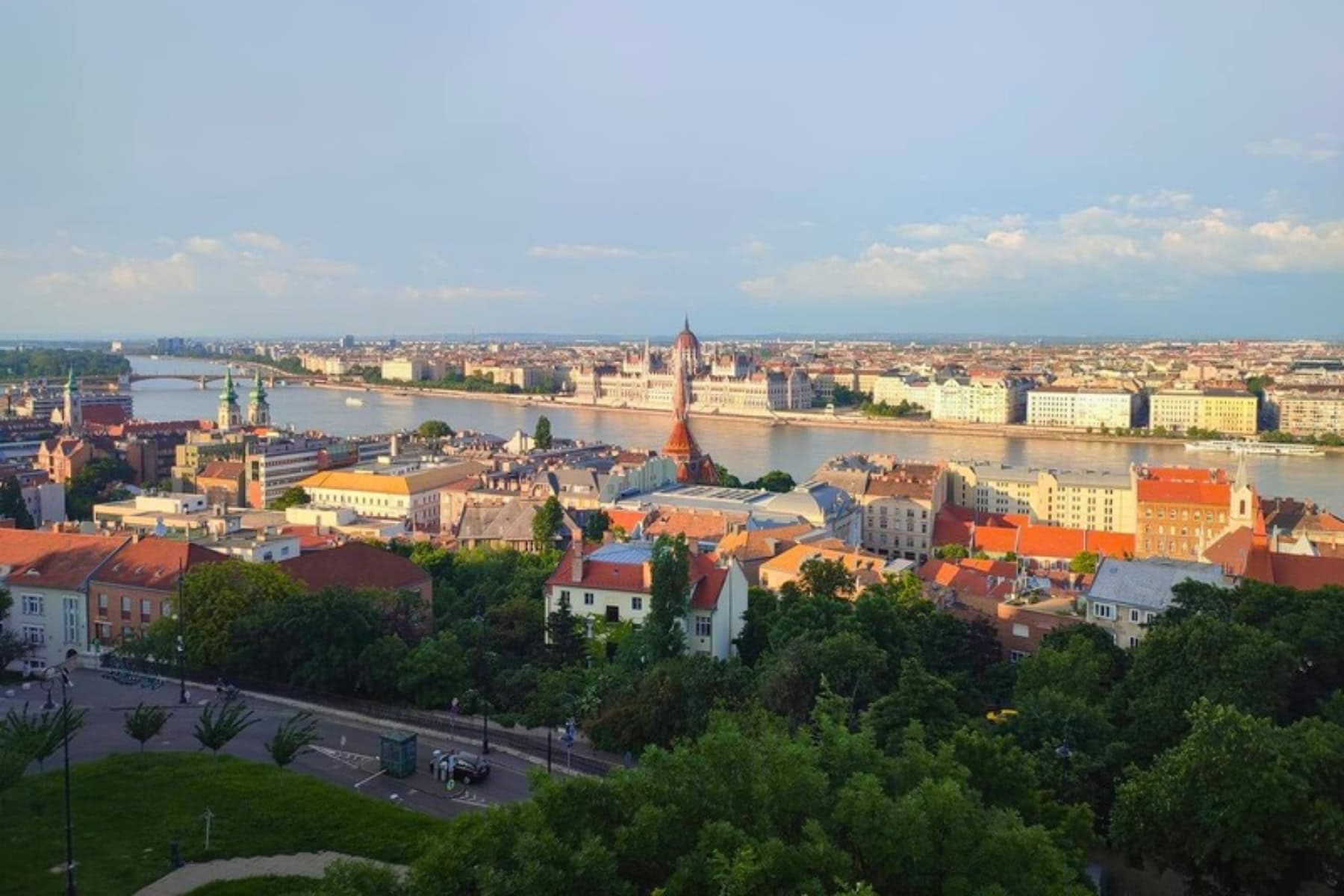
At the forefront is Stand, where chef Tamás Széll has set a national benchmark. His cooking doesn’t dramatize Hungarian cuisine; it clarifies it. Paprika is precise, proteins are treated with discipline, and the menu reads as a confident statement of where Hungary stands now — contemporary, rooted, and exacting. That inward gaze deepens at Salt, a restaurant that feels almost archival in intent. Fermentation, preservation, and rural sourcing guide the experience, turning Hungarian culinary memory into something tactile. Salt isn’t about nostalgia — it’s about continuity, and how flavor survives through technique.
Where Stand and Salt operate with formality, Borkonyha Winekitchen speaks in a more conversational register. Chef Ákos Sárközi’s kitchen balances Hungarian foundations with European fluency, anchored by a wine program locals trust implicitly. It’s fine dining that fits into real life — a place Hungarians return to, not just recommend. That same chef’s lighter touch appears at Textúra, where classic Hungarian flavors are reworked gently rather than rewritten. This is where diners who grew up with these dishes recognize them immediately, even as technique nudges them forward.
Narrative becomes explicit at Babel Budapest, where Transylvanian heritage shapes both menu and mood. The cooking is contemporary, but the emotional center is deeply Hungarian — food as memory, migration, and personal history rendered in modern form. Hungarian cuisine also evolves through cross-pollination without losing authorship. At Essência, Hungarian ingredients remain central even as Portuguese technique enters the frame. The result feels additive rather than diluted — a reminder that leadership doesn’t require isolation.
Budapest’s early Michelin era still speaks through Costes, which helped establish international standards locally and continues to refine rather than reinvent. Its influence remains structural, even as the scene matures around it. More intimate expressions appear at Rumour, where Hungarian sensibility drives a chef’s-counter experience that values proximity and dialogue. Virtu represents a newer generation — architectural, composed, and quietly ambitious — while still cooking from a Hungarian base rather than an imported identity.
Top 10 Hungarian-Led Culinary Restaurants in Budapest (2026)
| Restaurant | Hungarian Chef / Leadership | Cuisine Focus | Why It Leads | Experience Style |
|---|---|---|---|---|
| Stand | Tamás Széll | Modern Hungarian | National benchmark for fine dining | Formal tasting menu |
| Salt | Szabolcs Szulló | Regional Hungarian, fermentation | Culinary preservation as philosophy | Intimate, cerebral |
| Borkonyha Winekitchen | Ákos Sárközi | Hungarian-European | Locals’ Michelin favorite | Social, refined |
| Textúra | Ákos Sárközi (team) | Contemporary Hungarian classics | Bridges tradition and modernity | Relaxed fine dining |
| Babel Budapest | Hubert Hlatky-Schlichter | Transylvanian-Hungarian | Narrative-driven cuisine | Emotional, elegant |
| Essência | Hungarian-Portuguese chef team | Hungarian ingredients, global technique | Cross-cultural without loss of identity | Warm, modern |
| Costes | Hungarian-led team | International with Hungarian sourcing | Early Michelin influence | Classical fine dining |
| Rumour | Hungarian chef-led | Chef-counter Hungarian tasting | Intimacy and dialogue | Interactive |
| Virtu | Hungarian team | Modern European-Hungarian | Next-generation confidence | Architectural, polished |
| Stand25 Bisztró | Tamás Széll (casual concept) | Elevated Hungarian comfort | Fine dining values, everyday access | Bistro-style |
Together, these restaurants show how Hungarian cuisine not as a fixed tradition, but as a living system — one capable of creating a discipline, memory, or adaptation, showing moments of Budapest culinary scene's confidence without spectacle.
 thatanxioustraveller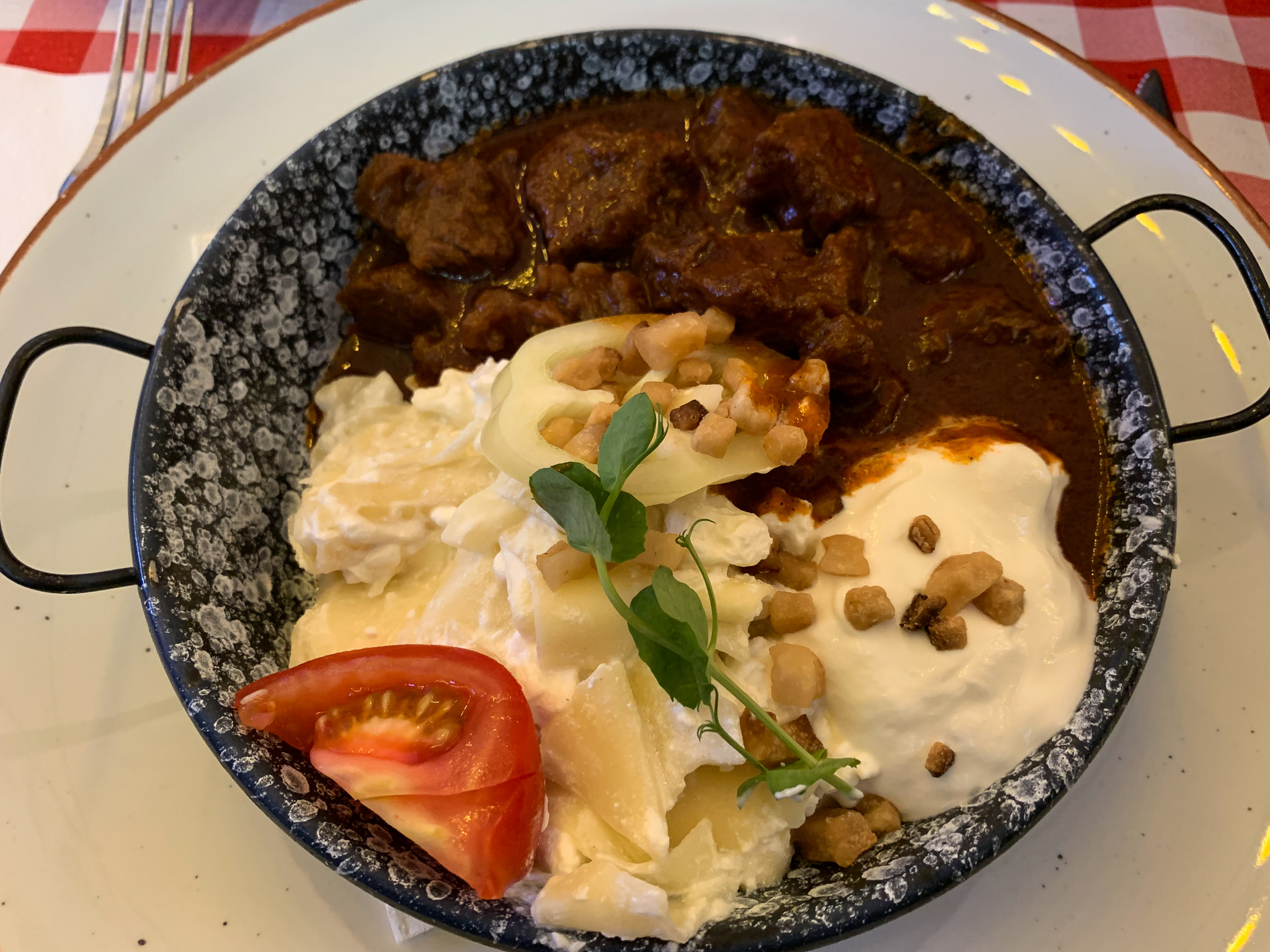
Markets, Bazaars, and the Rhythm of Everyday Budapest
In Budapest, food culture isn’t confined to restaurants and cafés. It flows through the city’s markets and bazaars like a current — unhurried, purposeful, and full of the quiet logic that underpins daily life. These are places where the city doesn’t perform for you; it lives in full view. Once you understand Budapest’s markets as infrastructure rather than attraction, the details start to sharpen. Certain stalls aren’t famous because they’re photographed — they’re trusted because people return to them weekly, season after season.
Morning light filters through the high windows, scuffing the wooden stalls. Farmers arrive earlier, laying out crates of greens, squash, and roots that shift with the seasons. In winter, cabbages and root vegetables dominate the conversation; in summer, tomatoes shine with a sun that tastes like memory. Behind every table is a person who could tell you exactly where that food was grown, because it came from land they know or neighbors they trust. The most iconic of all is the Great Market Hall. From a distance, its soaring iron and brick façade seems ornamental, but once inside, the architecture reads like infrastructure — designed to organize movement and sustain routine rather than impress. Locals still come here for errands, not sightseeing. Paprika isn’t a souvenir; it’s seasoning for the week’s cooking. Salami isn’t a trophy; it’s lunch. Produce is chosen by touch and smell, not by label or review.
Budapest’s central market where paprika, salami, produce, and daily staples still circulate with purpose. Best visited in the morning, when locals are shopping and the rhythm feels intact.
Inside the Great Market Hall, regulars drift instinctively toward the paprika sellers along the central aisles. The difference becomes clear once you slow down. Good paprika isn’t just red — it’s aromatic, warm, faintly sweet, and alive when rubbed between fingers. Vendors who cook will often tell you whether a paprika leans sweet or hot before you ask. That’s usually the cue you’re in the right place. The bottom floor hums with kinetics: fishmongers cleaning produce, butchers talking to regulars by name, and older women choosing paprika by color rather than brand. A common rhythm emerges — touch, smell, compare, talk, buy. There’s no push toward impulse, only conversation. It is the simplest and most honest form of culinary literacy the city offers. Near the butchers, you’ll notice locals gravitating toward counters selling Pick-style salami and kolbász by weight, rather than vacuum-sealed packs. These stalls move quickly because they supply everyday kitchens, not export shelves. The conversation is efficient, almost understated — the confidence comes from repetition. Upstairs, away from the loudest traffic, bakers sell loaves meant to be eaten within a day. The crusts crackle softly when squeezed. Locals buy bread here not for novelty, but because it fits the rhythm of lunch and supper. A loaf, some cheese, paprika paste — dinner solves itself. Off the main thoroughfare, smaller neighborhood markets operate on the same logic but at a different scale. Outside the tourist core, markets become quieter and more revealing.
On weekends, the farmers’ market near Hold Street Market Hall unfolds like a ritual that slows time rather than stops it. Here, makers bring honey in mismatched jars, sourdough loaves that bend when you squeeze them, and aged cheeses that still carry faint traces of the pastures where the animals grazed. Chefs shop here alongside residents, and you can feel it in the way produce is handled — examined carefully, discussed openly, chosen with intention. Honey sellers explain floral sources without marketing language. Cheese mongers talk about texture and aging the way winemakers talk about tannin. There’s no rush because nothing here is urgent — everything is deliberate.
A chef-favored market known for seasonal produce, artisan bread, Hungarian cheeses, and small producers. Less monumental, more conversational — ideal for understanding how locals actually cook.
In the Jewish Quarter, a churchyard market sometimes appears on Saturday mornings, offering a mix of flowers, seasonal produce, and bread that locals fold into weekend breakfasts. Conversations drift from stall to stall like streams finding a river. Children taste plum jam straight from the spoon; bakers laugh with vegetable growers they’ve known for years. This isn’t commerce as performance. It’s commerce as memory. And then there are the fruit and nut sellers who string their stalls along quiet side streets near the Danube, displaying dried apricots, roasted almonds, and figs that have the caramel warmth of late summers. People stop here not to check something off a list, but to bring back a taste that stretches across seasons.
On weekends and weekdays alike, neighborhood farmers’ markets appear with little announcement — church courtyards, small squares, the edges of parks. These are the places where you see how Budapest feeds itself when no one is watching. Apples are sold in reused crates. Eggs come in mismatched cartons. Someone always knows the farmer personally.
A rotating network of neighborhood and weekend markets across Budapest, often set in courtyards and small squares. Best for honey, bread, fruit, and regional products tied to seasonality.
The markets also explain Hungarian cuisine better than any menu ever could. You see why soups matter. Why paprika anchors rather than dominates. Why stews evolve slowly over heat instead of being rushed to intensity. Ingredients here aren’t designed to impress — they’re designed to endure. Even in smaller public squares, you find ingredients that taste like place. A fig on a warm afternoon, plums that droop with juice, peppers still warm from the sun — these aren’t souvenirs. They are reminders of what it feels like to follow the city’s pulse. Markets teach a rhythm greater than any itinerary: arrive early, speak quietly, touch and smell before you decide. It is a tactile education, one that doesn’t start with flavor but with context. When you buy a kilo of paprika here — not from a brightly colored tourist stall, but from someone who knows its origin — you are reading Budapest’s food logic: unforced, exact, and deeply tied to season and land.
Whether its a early morning roaming the cool corridors of the Great Market Hall or a slow paced afternoon stroll in the sun-warmed aisles of a Saturday farmers’ market, you begin to notice patterns of local rituals. Cucumbers are firm when they are young. Apples carry different acidity with each week of autumn. Roots tell the season’s story in heaviness and color. It is less food as spectacle and more food as literacy — the kind of knowledge people carry into own kitchens rather than awards cabinets.
That’s why buying from these spaces feels grounding. You aren’t collecting flavor; you’re borrowing someone else’s routine for a moment. And that is why markets matter here. Because they don’t perform. They circulate with purpose — and in that circulation, you find an opportunity for yourself to experience a local preceptive while discovering Budapest’s cultural soul & heartbeat.
Bath Culture as Daily Maintenance, Not Novelty
In Budapest, bath culture functions less as an attraction and more as upkeep. It’s how the city maintains itself through cold months, long walks, and the accumulated weight of history. The baths aren’t themed experiences or indulgent pauses tacked onto an itinerary. They’re part of the city’s operating system—used regularly, talked about casually, and trusted to do their quiet work.
 Stephen Bugno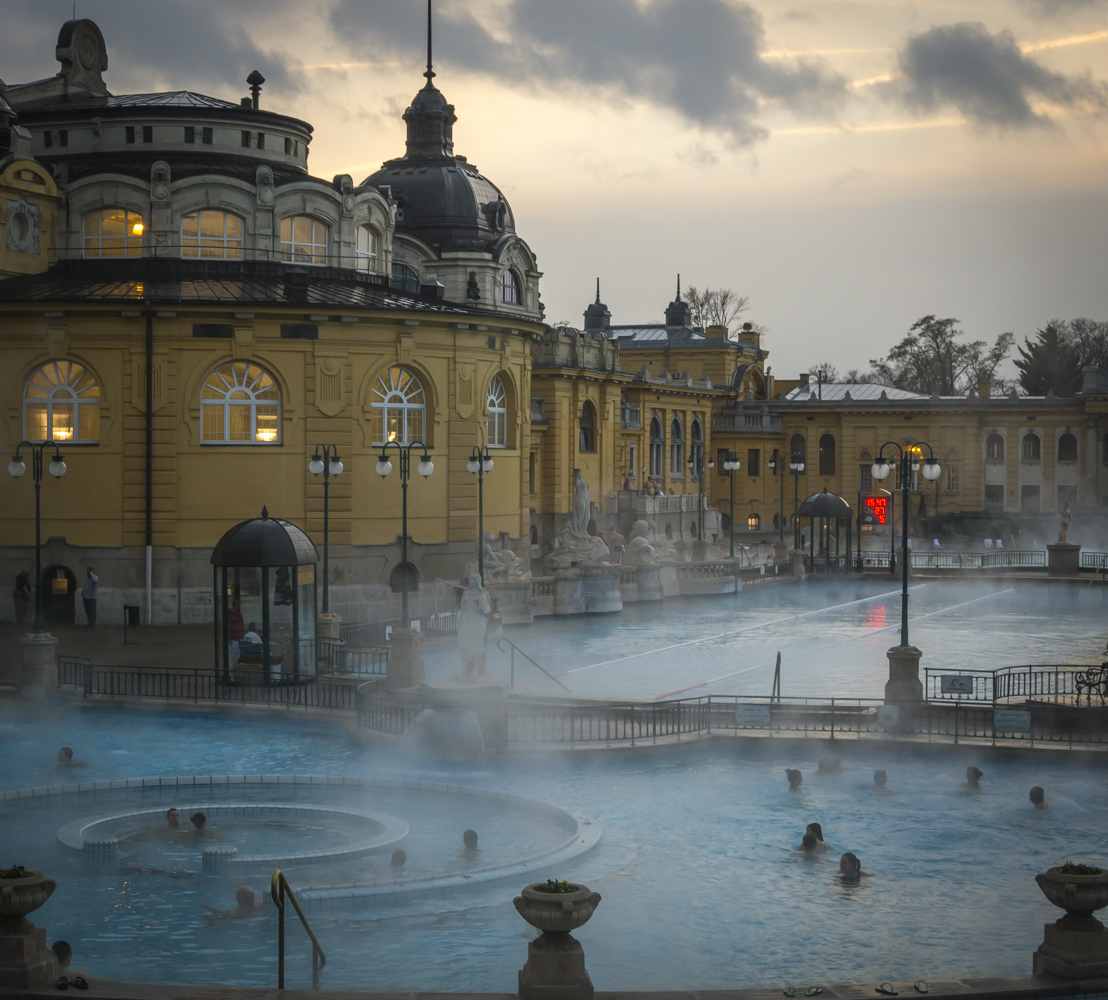
You feel this most clearly at Széchenyi Thermal Bath. Set within City Park, Széchenyi is expansive and public-facing, almost civic in spirit. Locals meet here the way others meet at cafés. Chess boards hover just above the steaming water. Conversations drift in and out, unhurried. In winter, the contrast does half the work—cold air biting at your shoulders, mineral heat steadying everything beneath the surface. The scale matters. This is a place designed for the city to gather, to be visible, to share warmth without ceremony. Go in the morning if you want space and clarity; late afternoon carries a social hum that feels distinctly Budapest.
 July 20, 2016 at 10:11 am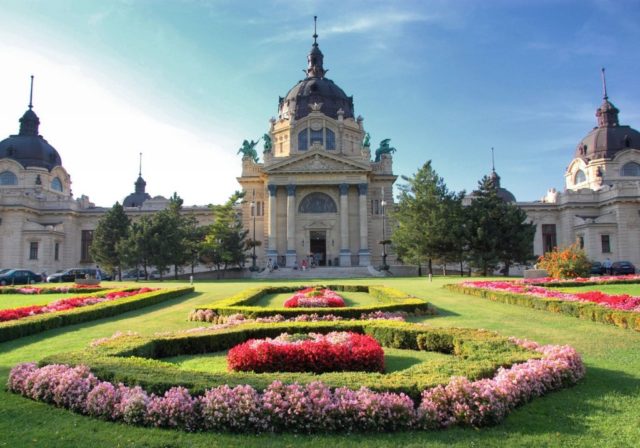
Then there’s Rudas Thermal Bath, which turns inward. Older, darker, and more architectural, Rudas still holds its Ottoman logic. The domed central pool filters light softly; sound drops as voices instinctively lower. Time behaves differently here. You’re less likely to linger in conversation and more likely to sink into repetition—step, soak, breathe, reset. Evening sessions, especially midweek, feel almost monastic. This is maintenance at a personal scale, the kind that leaves you quieter afterward rather than energized.
The difference between the two isn’t better or worse; it’s orientation. Széchenyi reflects Budapest outward—social, collective, lightly theatrical in the way public life often is. Rudas reflects it inward—private, historical, shaped by ritual rather than spectacle. Locals move between them depending on mood, weather, and need.
Etiquette is simple and largely unspoken. Move slowly. Keep voices low. Follow posted rules without debate. Rinse when asked. Share space generously. The baths work because everyone agrees—without saying so—that this is common ground. If you arrive with that understanding, the experience settles naturally.


Practical Bath Tips – ContextTravel.com Historic context and visitor tips for Széchenyi, including architecture, heritage, and local bathing habits.
Winter is when bath culture makes the most sense. February, especially, strips away any lingering sense of novelty. Steam rises, snow sometimes gathers at the edges, and the baths feel essential rather than scenic. But even in warmer months, locals come back. Maintenance isn’t seasonal. It’s habitual.
Leave the baths without rushing. Walk afterward, even if the air is cold. Let the heat recede slowly. That transition—warm to cool, still to moving—is part of the ritual. It’s often in that walk, not the water, that Budapest feels most legible: a city that knows how to take care of itself, quietly and well.
Experiences and Hidden Gems That Create Real Connection
Some of Budapest’s most honest moments arrive quietly. They don’t announce themselves as highlights, and they don’t ask for your attention all at once. They reveal themselves when you slow down just enough to notice how the city breathes between its better-known landmarks.
High above the Danube, Gül Baba’s Tomb sits like a held breath. Reached by a gentle climb through residential streets, the site feels deliberately removed from the city’s noise. This is not a grand monument in the Habsburg sense, but a place of reflection tied to Budapest’s Ottoman layer—quiet, inward, and deeply human in scale. Locals come here to walk, to think, to look out over the river without commentary. The gardens encourage stillness rather than movement, and the city below feels momentarily paused. It’s the kind of place where history doesn’t perform; it settles.
Closer to the river, Várkert Bazaar offers a different kind of calm. Restored and reimagined, it stretches along the Buda side beneath Castle Hill, combining 19th-century architecture with open walkways and cultural space. What makes Várkert Bazaar special isn’t what you do there, but what you don’t have to do. There’s no pressure to enter, purchase, or progress. You walk, you stop, you look at the river, you notice details in stone and ironwork. Architecture becomes something you inhabit rather than admire from a distance. It’s an ideal place to let the city recalibrate after a museum or before dinner.
And then there is the simplest experience of all: the tram along the Danube. Lines that hug the river—especially those running between Margaret Bridge and the southern stretches of Pest—turn public transport into participation. Sitting by the window, you watch Parliament slide past, bridges frame and reframe the water, and daily life unfolds at human speed. This isn’t sightseeing. It’s moving with the city. No narration, no curation. Just proximity. You’re not consuming Budapest; you’re sharing its rhythm for a few stops.
These experiences matter because they resist spectacle. They ask very little of you beyond attention. In return, they offer something durable: a sense of belonging, however brief. Budapest connects most deeply when you let it do what it does naturally—layer history quietly, hold space for pause, and reveal itself between destinations rather than at them.
A Note on Arrival and Departure: Letting the City Frame the Journey
Budapest also rewards travelers who think about how they arrive and how they leave. The city’s position along the Danube makes it a natural hinge between Central Europe and the wider continent, and certain journeys echo that role with unusual clarity.
For those who want Budapest to feel like part of a longer narrative rather than a standalone stop, Tauck river cruises along the Danube offer a fitting approach. Moving by water reframes scale and history—capitals give way to smaller towns, borders soften, and context accumulates naturally. Budapest works especially well as a starting or ending point on these itineraries, where the river’s pace allows the city’s layers to settle before you step ashore or after you depart.
There is also a more theatrical echo of the city’s Belle Époque past. The Belmond Venice Simplon-Orient-Express still treats Budapest as a meaningful chapter rather than a novelty stop. Routes vary by season, but journeys connecting Paris and Istanbul, with Budapest along the way, mirror the city’s historic role as a crossroads between worlds. The pace is deliberate, the setting ceremonial, and the experience frames Budapest not as a destination to conquer, but as a city to enter and exit with intention.
Both journeys—river and rail—align with Budapest’s temperament. They favor continuity over speed, context over accumulation. They let the city do what it does best: receive you slowly, then release you with a clearer sense of where you’ve been.
A closing note on pacing, memory, and what to leave out
Budapest doesn’t ask to be conquered. It asks to be read—slowly enough that the layers can stack without collapsing into a blur. The Danube is still the best teacher. Keep returning to it between plans and you’ll notice the city starts to make sense on its own: Buda holding its older, quieter posture; Pest keeping tempo with cafés, boulevards, and evening culture that still dresses up for itself.
What changes everything is choosing fewer moments and letting them land. One museum with real attention beats three museums skimmed. One long café hour—Gerbeaud if you want Budapest’s polished memory, New York Café if you want its theatrical echo—does more for understanding the city than another “must-see” squeezed into a tired afternoon. One bath session, properly timed, resets your whole relationship to the day.
And food here works the same way. The best meals don’t arrive as revelations; they arrive as reassurance. Rosenstein feeds you like a family table that never needed to explain itself. Gettó Gulyás makes goulash behave exactly as it should—warming, steady, weatherproof. Menza absorbs the city’s everyday rhythm without trying to impress you, and KIOSK makes Budapest’s present tense feel confident rather than performative.
 Tas Tóbiás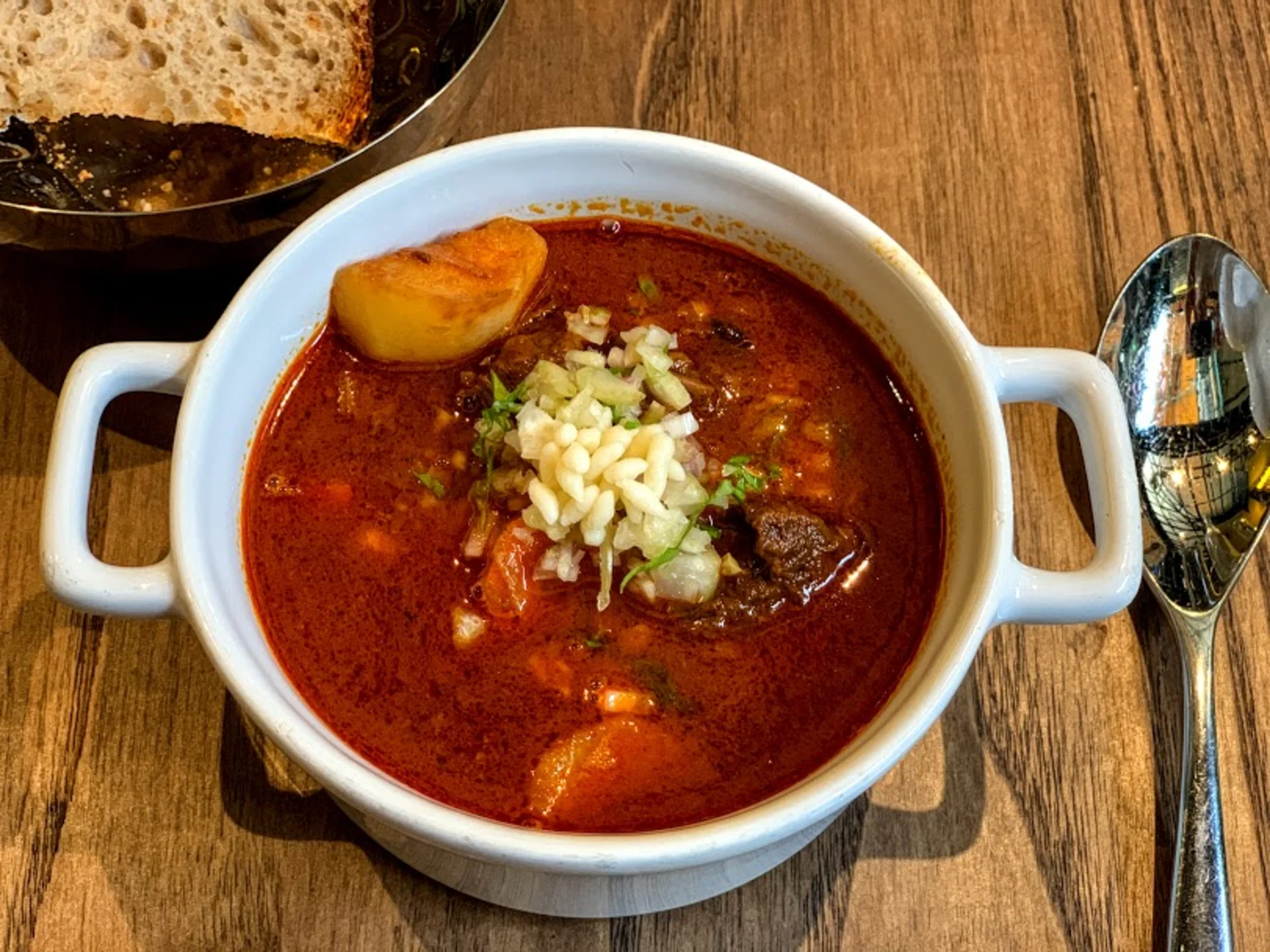
So here’s the edit that makes Budapest better: leave space on purpose. Leave room for the tram ride that isn’t “transport” so much as a moving vantage point. Leave room for the market in the morning when locals are still shopping with intention and the city is in work mode. Leave room to walk after the baths, even in cold air, because that warm-to-cool transition is part of the ritual. If you build your days with that kind of margin, Budapest stops presenting itself and starts speaking in full sentences.
If you want this style of Budapest—culture-first, rhythm-aware, with hotels and tables that actually support the experience—I can design the full trip so the logistics disappear and the city’s cadence stays intact.
Plan Your Next Trip with with Sara Chan
Explore bespoke, culturally immersive travel planning with an independent Fora Travel Advisor.
Sara Chan - Independent Fora Travel Advisor
Curated journeys · Cultural depth · Thoughtful pacing
FAQ: Budapest travel planning
- How many days do you need in Budapest? 3–4 days gives enough room for Buda mornings, Pest evenings, and one proper bath reset.
- Is Budapest better in winter or shoulder season? Spring/fall for comfort; winter for baths, museums, and quieter streets.
- Where should first-timers stay? River-adjacent Pest for orientation; Buda for quieter mornings; Andrássy/District VI for culture and evening ritual.
Sara Chan is an independent Fora Travel Advisor specializing in culturally immersive, thoughtfully curated travel experiences worldwide.
https://www.foratravel.com/advisors/sara-chan
No spam. Unsubscribe anytime.
Sign up for Wanderlust Tapestry
Curated journeys. Cultural depth. Inspired travel.
more posts:
 Sara Chan
 Sara Chan
 Sara Chan